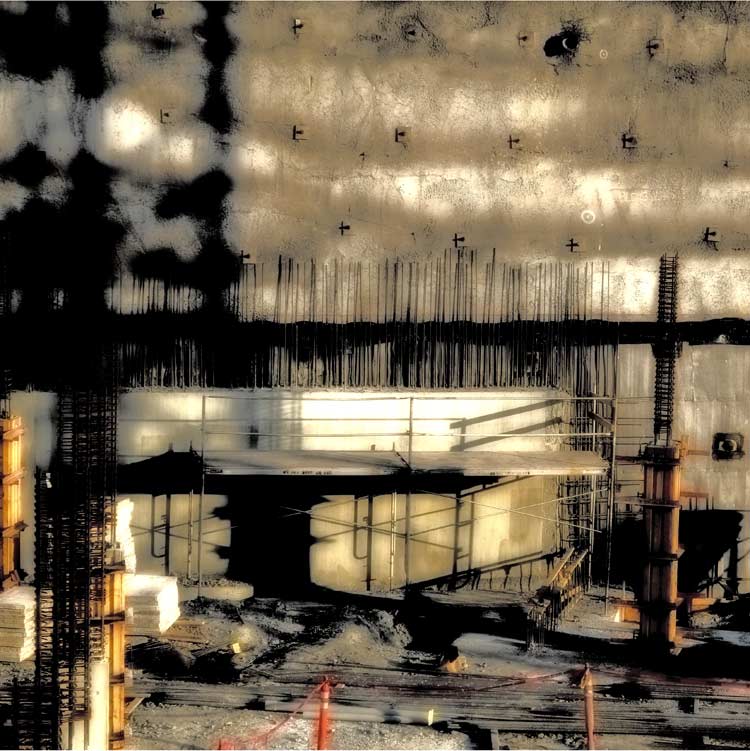
Construction Site Study, July 9
In the beginning, which is to say about three minutes ago, after the invention of the wheel but before there were scanners and i-phones and computers, there was the book, the magazine, and the scissors. And there were people who collected stuff, and cut it up. The word “de-clutter” had not been invented, and you could still find magical things in fleamarkets, which had not yet been scraped bare by scavengers from Ebay. There were people who didn’t live to throw stuff away or shrink it to a thumb drive, they lived instead to adore the object, to gather ephemera, to let all the fabulous detritus of culture float about them and settle into new order. In this way was born the art of modern collage. Friday I was privileged to spend a morning visiting the studio of one of the very best collage artists of today, Richey Kehl.
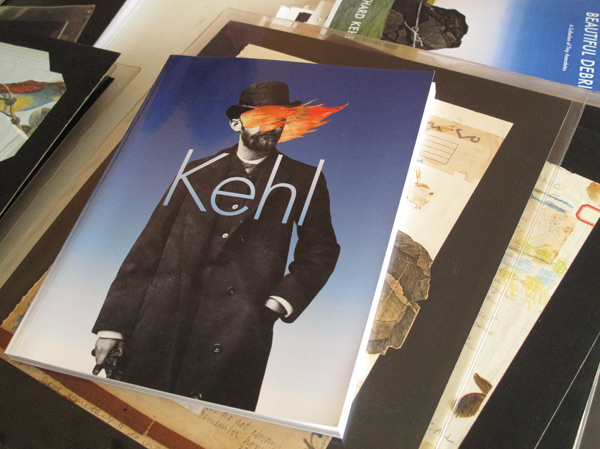
I put him in my personal pantheon of the collage greats, with Romare Bearden and Tadanori Yokoo. Kehl’s work is nostalgic and elegiac, exquisitely decorative, but also dizzying in its leaps of association. I studied with him briefly when he taught at the University of Washington, and will never forget his epic slideshow. A kind of whole brain-boot-camp experience, this transcendent hour in the dark with yes, a slide projector, inhaled you at one end as a rational if anxious student struggling just to “learn how to paint” and spit you out at the other end almost enlightened. The seemingly random image sequences had no explainable logic, and yet stirred your unconscious to a sense of exhilaration and purpose. You would not see things the same way again.
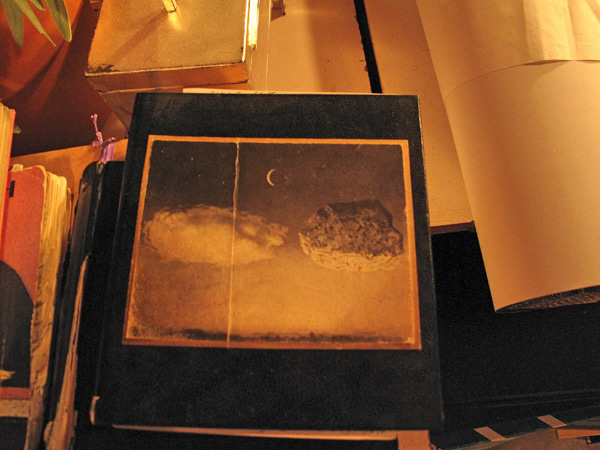
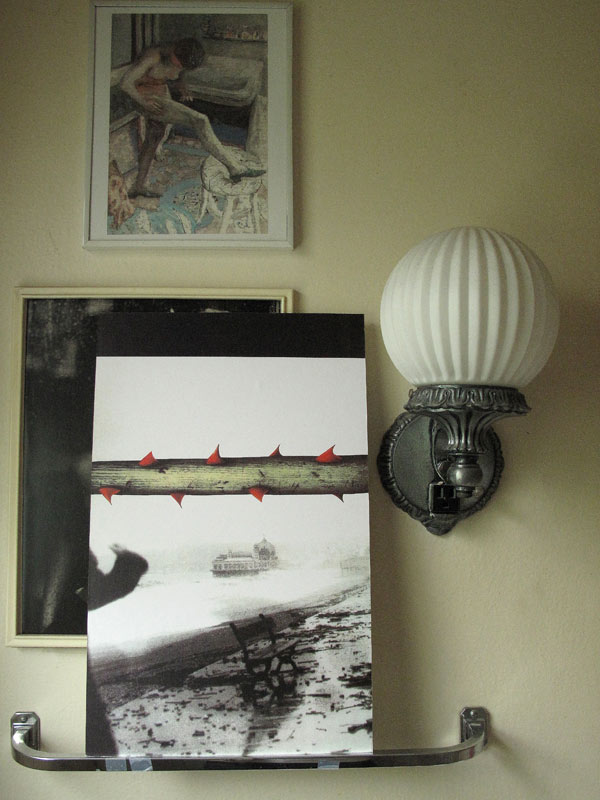
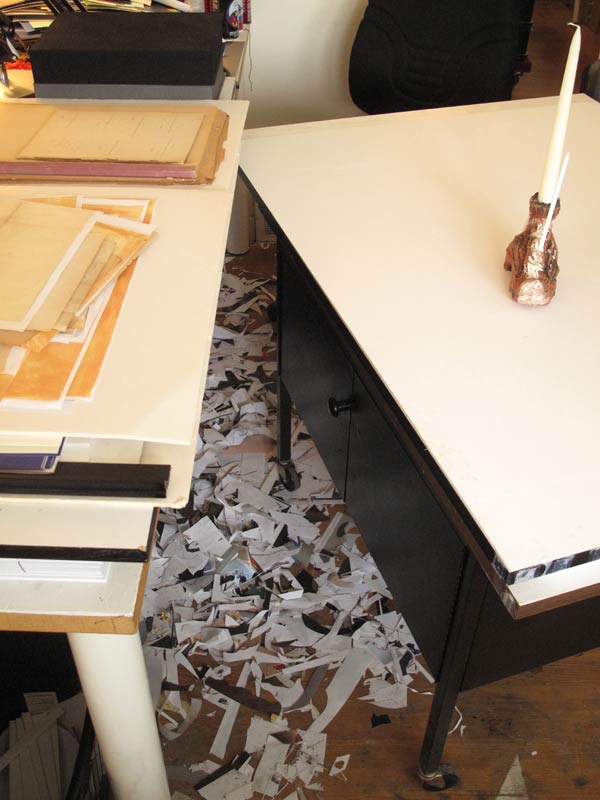
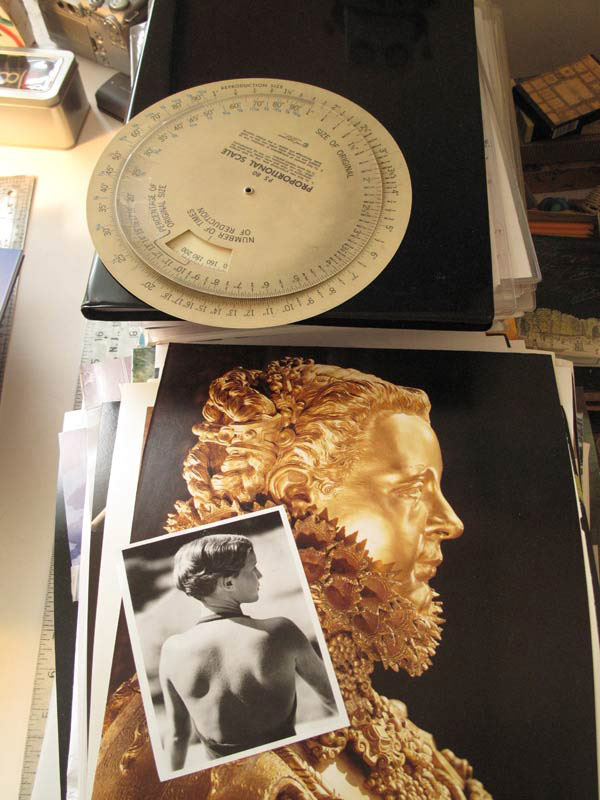
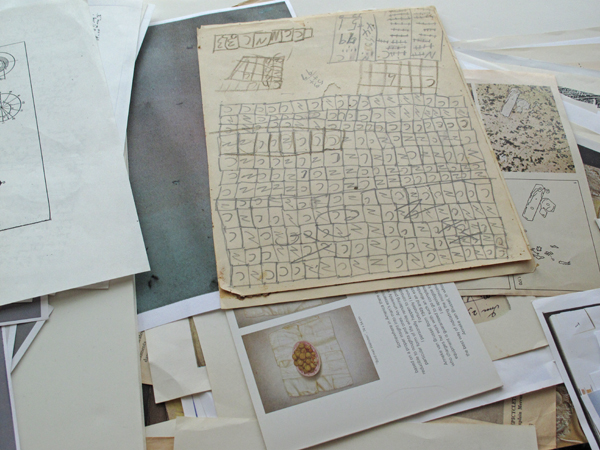
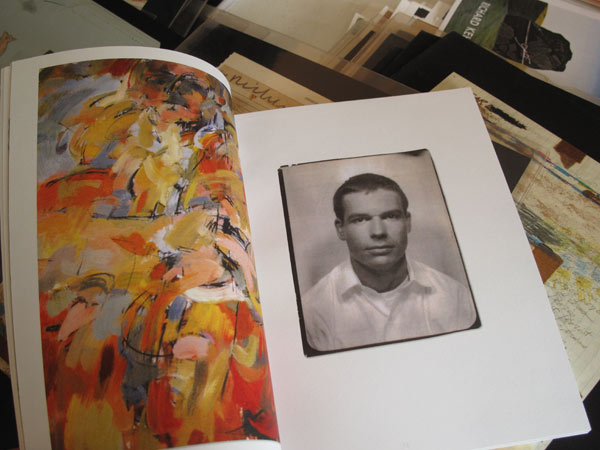
I have often wondered how a dedicated collage artist copes with The Stuff. Is there a system? How do you arrange your workspace so you don’t go completely out of your mind? Do you have a method to the madness? If you are Richard Kehl you buy a house, and turn the entire structure into a living breathing library of books, objects, ephemera and eternal work in progress. Each object and image is honored and tended, with the understanding that it is on a path to relationship with other objects and images that will make sublime sense.
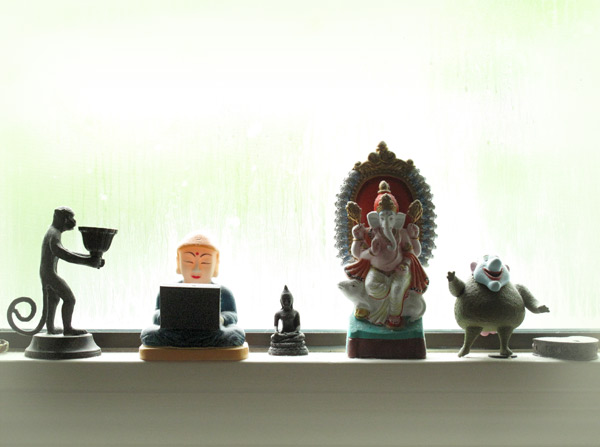
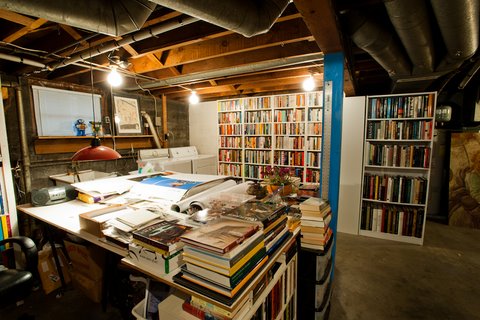
You honor books with as much love and attention to indexing as the Library of Congress, with entire rooms of the basement dedicated to outsider art, Japonisme and photography. “I got rid of all my books once. And then I had to buy them all back.”
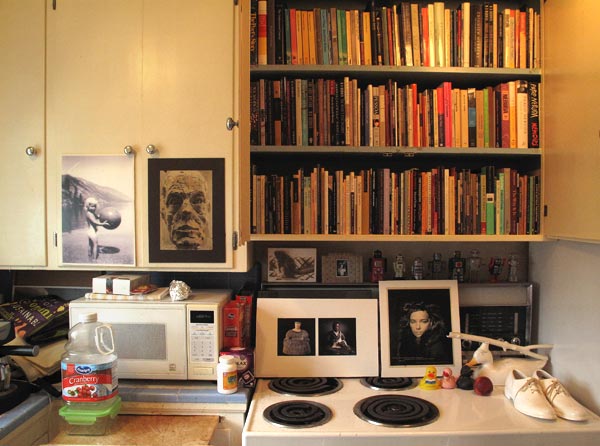
And who needs dishes? You keep your poetry in the kitchen, for whenever hunger strikes.
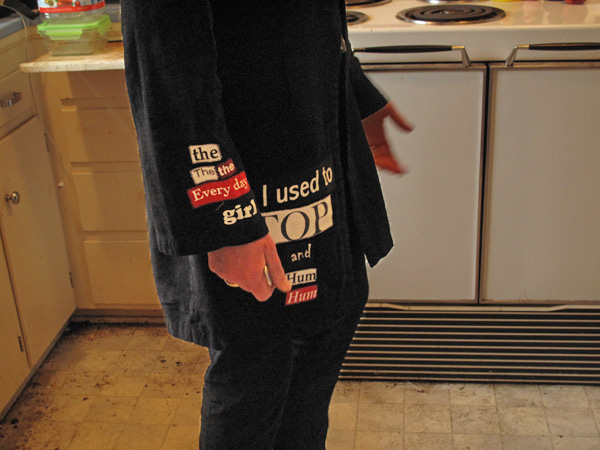
This encourages your friends to respond in kind. With me on the studio visit were Joe Max Emminger, Lana Sundberg and Julie Paschkis, seen here wearing a poet’s coat.
In answer to the question of all those little bits of paper: you have a bank. Stacks of foam core board hold hundreds of images, collage in waiting.
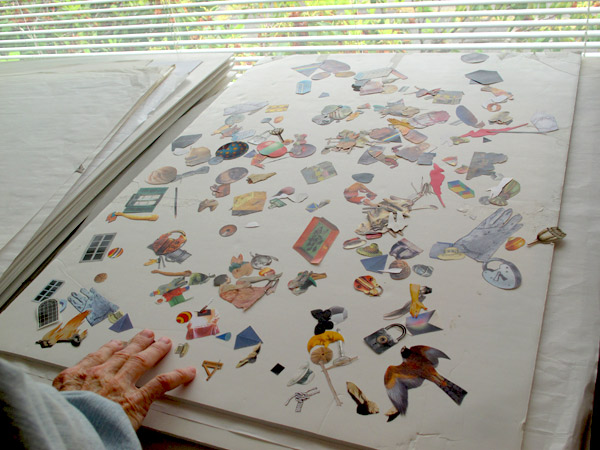
“I have nothing to do with it. I wait for them to tell me where they belong and what to do next.”
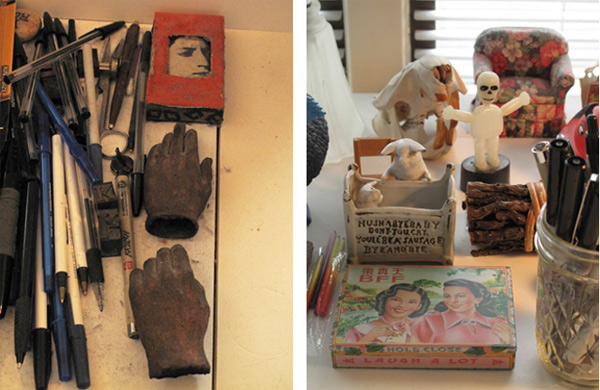
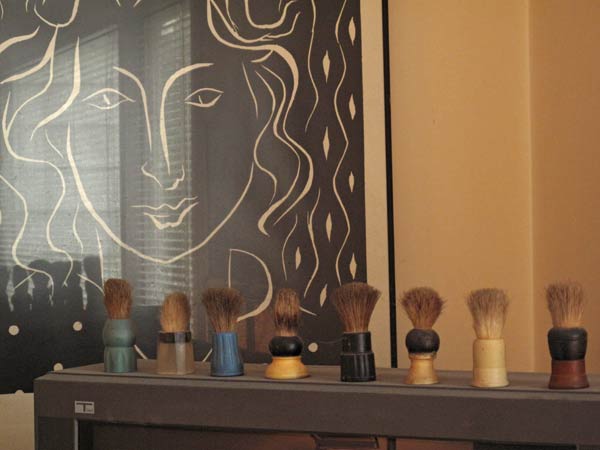 Two of Kehl’s enduring themes, The Masculine and The Feminine, seen above in diorama.
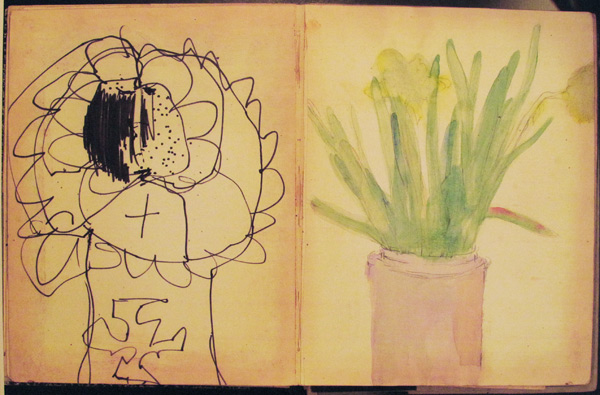
An early collaboration in a framed sketchbook page, a drawing by Norman Laliberte on the left, and Kehl on the right.
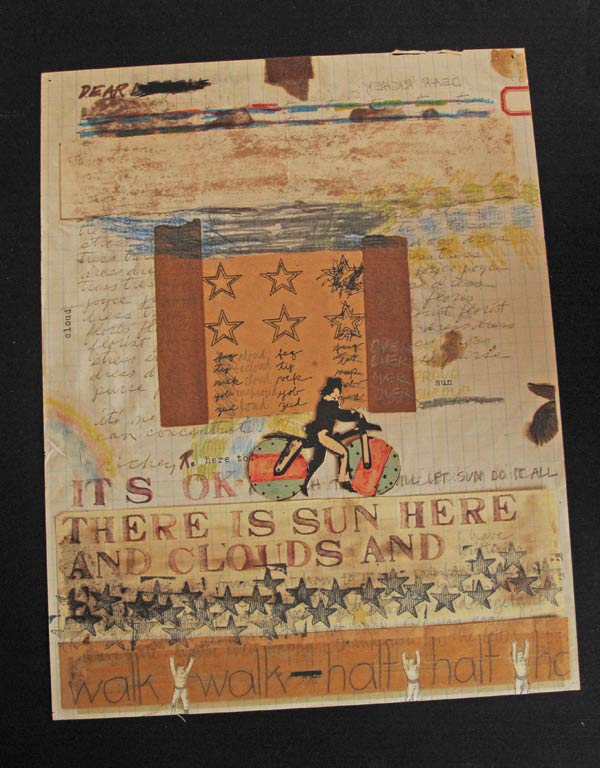
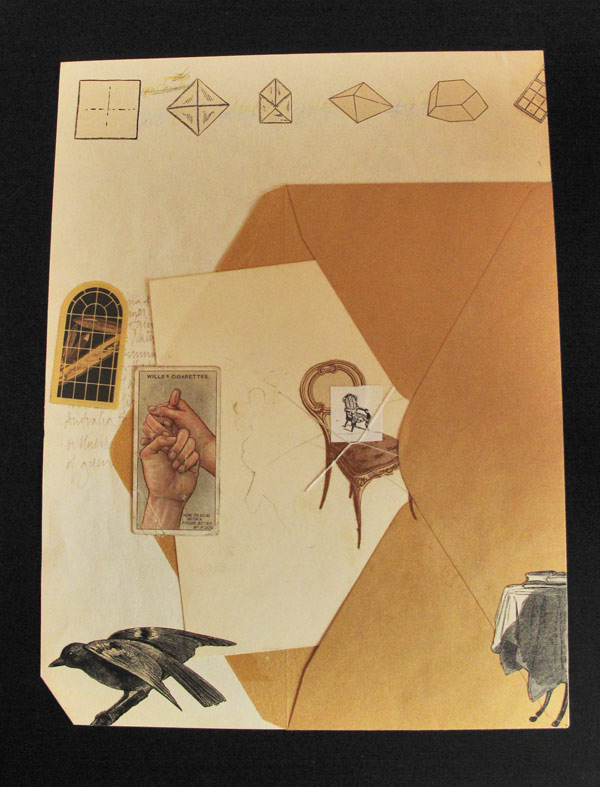
In the late ’60’s and early ’70’s a whole language of collage was developed by people like Richey Kehl, working in concert with poets, visual artists and kindred spirits. This was the beginning of mail art, magical talismans hand-cancelled and sent back and forth to be elaborated upon and transformed and challenging the idea of what is “mine.”
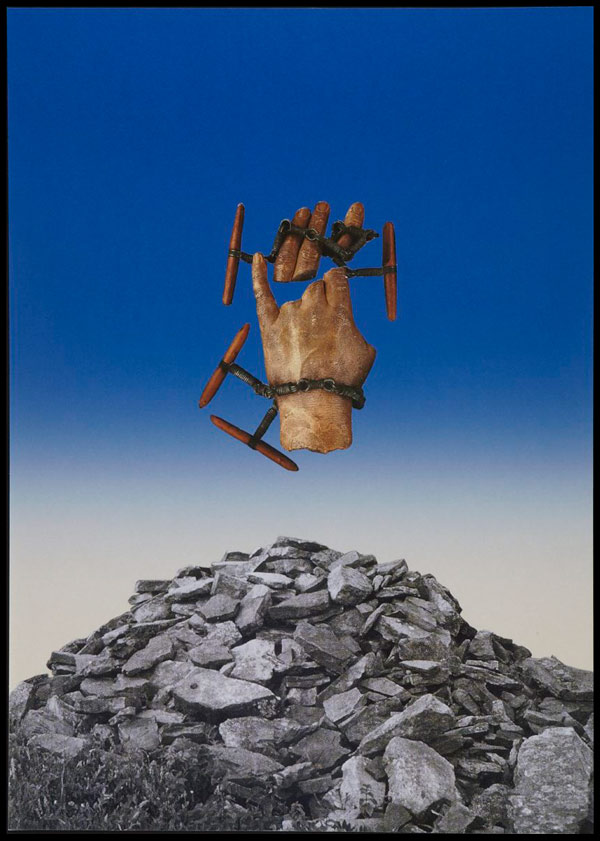
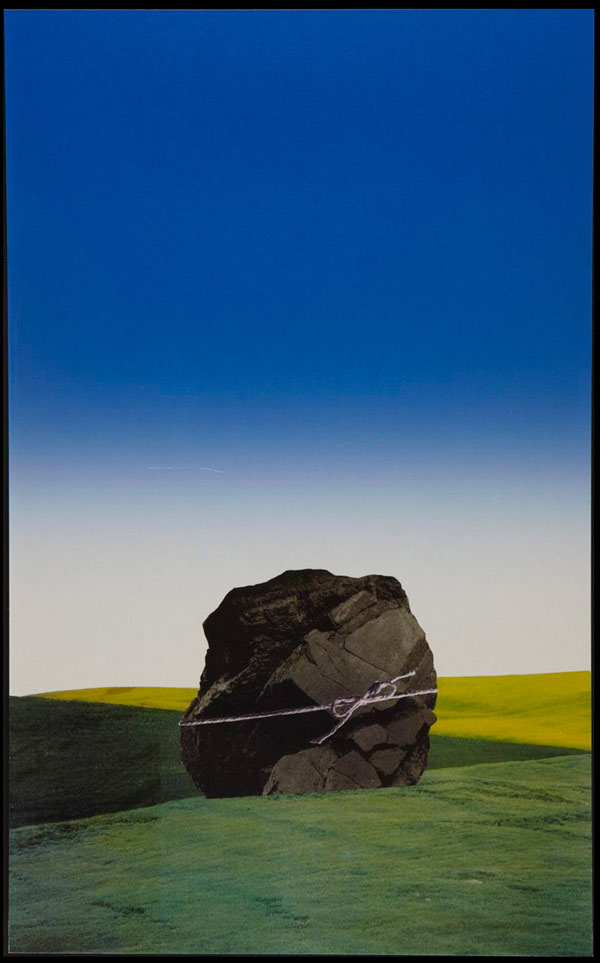
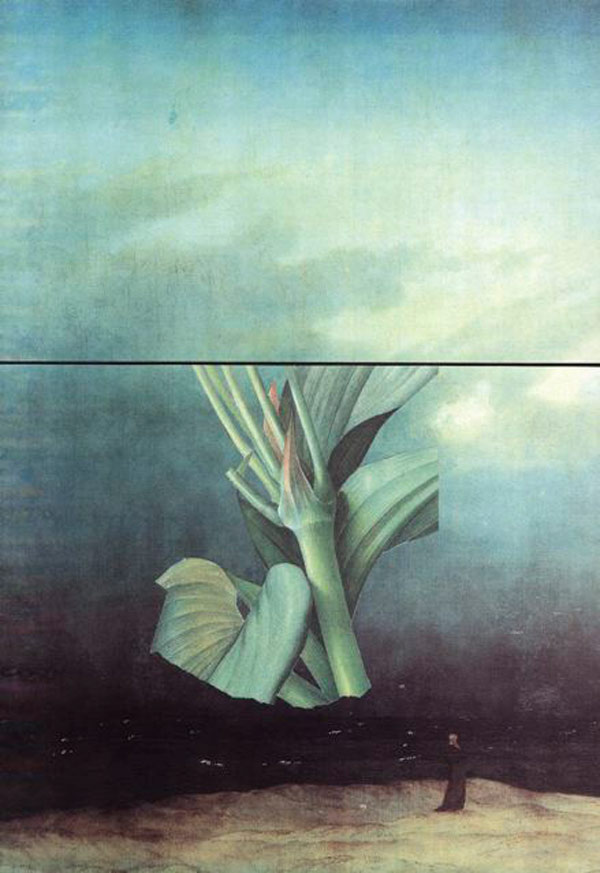
Below, some of the Kehl’s newest work. I look at these and feel like I am seeing a combination of chess master and Merlin at work, at the height of his alchemical powers. All collages copyright Richard Kehl, used by permission of the artist.
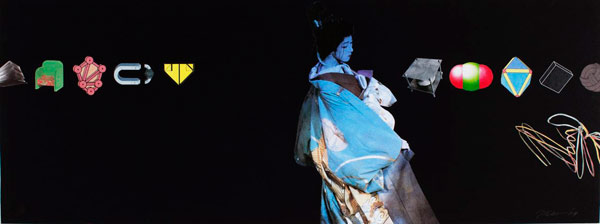
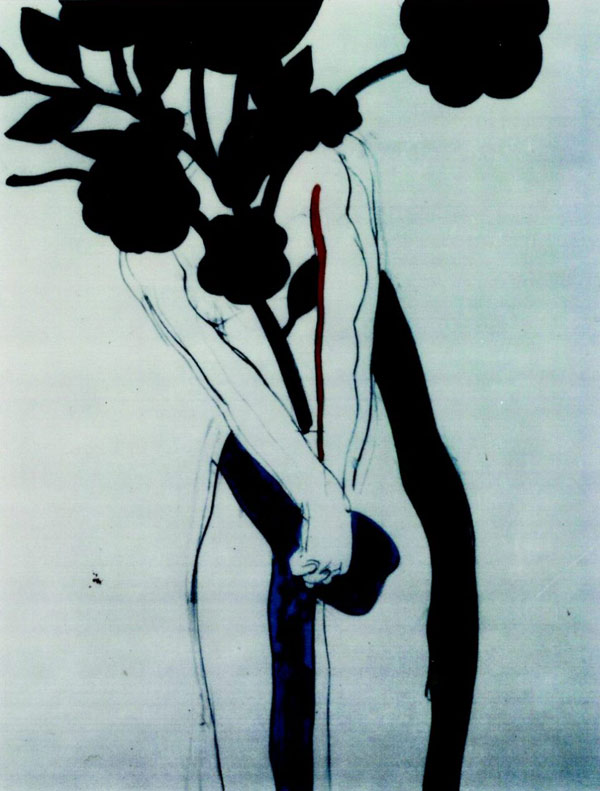
I am ending with this last drawing which comes from a much earlier era. A pure drawing that holds all the elements that I love in Kehl’s work. Thank you Richey, for your brilliance and inspiration.
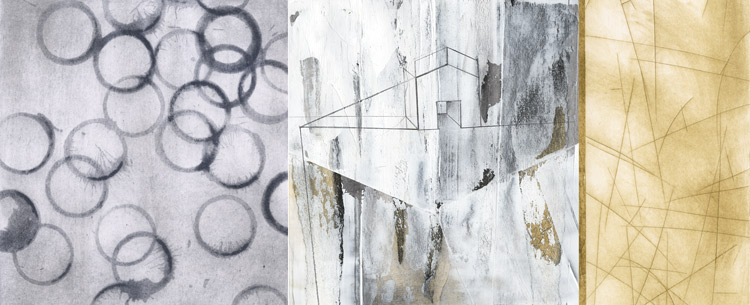

“Keeping vigil over the longest days of the year, in the month of the white flower.”

With only three days left before the turning of the equinox I find myself unable to go inside. I want to hold on to every minute, memorize the evening sky, and tend the garden meticulously. Last night I thinned the bamboo until the last faint glow had left the clouds and I could hear the raccoons rustling. Then amidst the pale constellations of anemone and allium I sat on the stairs and reveled in the warm and unexpected air. At dawn I returned to the same step and listened to the birds. Intermingled with the grown-up towhee and the bullying crow I could hear the unmistakable high pitched keening of baby chickadees. These are remarkable days. Days when time stretches and the night and the morning seem to recognize and greet each other, clasping hands across the dream hours.
It is very easy to dream with ones’ eyes open and to miss what is sitting right in plain view. This week while sitting and writing I looked up and suddenly saw the lacquer box. When I stumbled upon it years ago in an antique store I knew it was something I had to have, an object of instant charisma and absurd expense that became, perversely, annoying on possession. The cover would not latch, and the surface seemed very fragile, almost ash-like, flaking when exposed to sun. I stopped looking at it directly, with a combination of guilt at my acquisitiveness, and chagrin that I could not take care of this old and precious thing which seemed to be losing beauty with every day in my possession.
The mystery of why and when we decide to see what is in front of us has never been explained to me. Perhaps in this case the proximity of dawn to midnight jarred me from my usual sleep, and I rose and picked up the box. From across the room the panel covering the drawers seemed to show simple primitive shapes, perhaps a palm tree, or a hut. Only as I held it in my lap did I see that it was meticulously drawn, each shape outlined, incised, and precisely inlaid with gold. It could be “merely” painted, but part of the miracle of this object was its flawless subterfuge. When I ran my fingers across the surface I could feel no raised edges as I would with purely surface brush strokes, but something more complex, an incision and an addition. Over this, layers of lacquer and a dusting of time and its furrows. If I was being fooled, if it was in fact “merely painted” then all the more power to the artist for leaving me dazzled, either way.
Not only had I not really studied the technique, I had missed the narrative; not just one tree but two: a banana tree, a pine, intertwined. A man in scholar’s robes and cap sets forth from his house, holding a brush at eye-level as though to take the measure of all that lies before him. Through the open shoji screens behind him incense burns, arranged in graceful order with a red teapot, a large urn and a slender vase with two fronds of grass. Several paces behind, a child or servant follows his master, ink stone in hand. I can hear the crickets; the air is damp.
On the back of the door, all studies fail. The shape I would have told you was a waterfall rises from a cloud on the ground: not water but a tree raked by moonlight. Its fruit is outlandish and skewed, unidentifiable except for a multitude of red seeds painted in thick, lustful carmine. Perhaps this is the tamarind tree, from which lacquer is made. The sense of incense and tropical air is so strong I feel disoriented in time and place, and reach up to touch my hair, half expecting it to be long and lacquer-black, roped in pearls and ivory combs. I remove the door and open the drawers. The first one, cobwebs, the third one, nothing. But the one in the center holds an old postcard, and the dried pod of a Japanese Snowbell. Oh, that spring! When did I hide this memory from myself? And why? I hold the perfect brown bell between my fingers and marvel at its perfection. If I squint I can see the tree and it layered temple of branches. Was I with a friend? On a solitary walk? Perhaps it does not matter that the details elude, because in this moment I am completely here, in this practice of forgetting and remembering, again and again.

Photographs © Iskra Johnson